
Dump Truck Remanufacturing Process
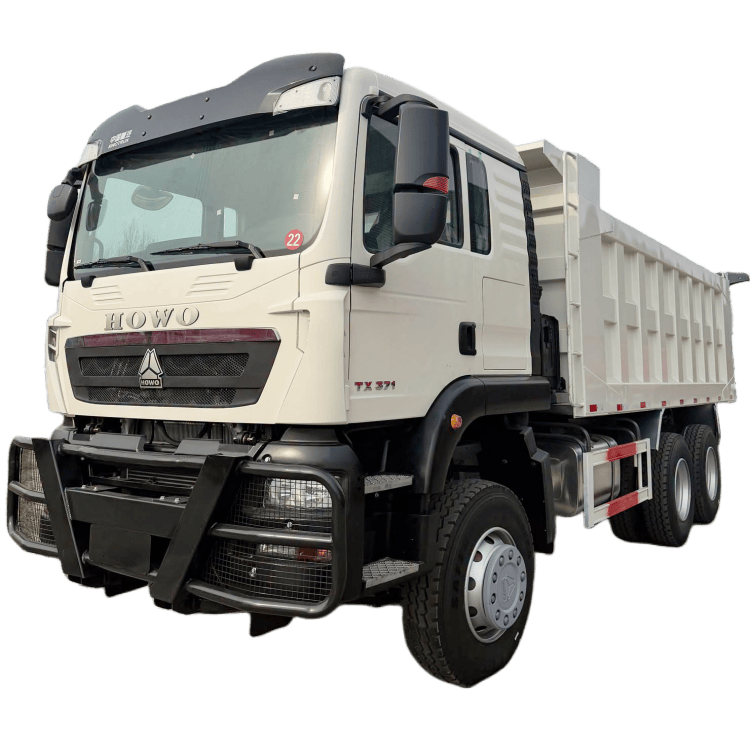
Dump Truck Reman Overview
Dump trucks operate under extreme heavy‑impact mining, quarry and earth‑moving conditions. Long‑term overloading, bumpy roads and frequent cargo dumping lead to frame metal fatigue, chassis torsion deformation, powertrain internal wear, hydraulic component aging and cargo box impact damage. Simple surface repainting and partial component repair cannot eliminate these latent structural safety hazards. The standard dump truck remanufaacturing process is a complete industrial‑grade regeneration workflow. Each execution step follows quantifiable reman benchmark standards, focusing specially on load‑bearing structure, heavy‑load power output and dumping hydraulic performance, to restore the whole reman dump truck to stable near‑new operating performance.
Table of Contents
- Step 1: Incoming Vehicle Screening & Initial Condition Evaluation
- Step 2: Complete Full‑Vehicle Disassembly
- Step 3: Industrial Deep Cleaning & Non‑Destructive Defect Detection
- Step 4: Frame Calibration, Crack Repair & Stress Relief Treatment
- Step 5: Powertrain Full Disassembly Overhaul & Performance Recalibration
- Step 6: Complete Hydraulic Lifting System Overhaul
- Step 7: Cargo Box Reinforcement & Cab System Restoration
- Step 8: Standardized Full‑Vehicle Re‑Assembly
- Step 9: Multi‑Level Working‑Condition Simulation Test
- Step 10: Traceability File Archiving, Surface Finishing & Final Delivery
- REMAN ROAD: Brand Positioning, Core Standards & Development Vision
Step 1: Incoming Vehicle Screening & Initial Condition Evaluation
Only eligible base vehicles can enter truck remanufacturing workflows. Professional inspectors review the service history, previous accident records and original operating scenarios of each incoming dump truck.
- Carry out visual inspection and thickness measurement for main frame beams; reject units with penetrating frame cracks, twisted longitudinal beams and irreversible structural damage.
- Conduct preliminary running inspection for engine, gearbox and lifting hydraulic system, record baseline wear data.
- Screen out vehicles with burnt‑out powertrain, severely corroded chassis or fatal collision damage. All screening results are recorded into the vehicle traceability file.
Step 2: Complete Full‑Vehicle Disassembly
Implement total teardown instead of partial disassembly, to expose hidden defects covered by exterior paint.
- Dismantle in fixed sequence: cab → cargo box → hydraulic lifting assembly → drive axle group → transmission → engine → suspension system → frame.
- Each disassembled component is labeled with exclusive serial tag, corresponding to the VIN of the base truck, to realize one‑to‑one traceability.
- Separate reusable repairable parts, parts needing overhaul and parts to be scrapped, and place them in classified storage zones.
Step 3: Industrial Deep Cleaning & Non‑Destructive Defect Detection
Used dump trucks carry large amounts of mineral mud, dust and metal abrasive particles, which will interfere defect judgement.
- High‑temperature high‑pressure industrial cleaning for all disassembled assemblies, remove embedded mine dirt, residual lubricating oil and surface oxide layer.
- Apply ultrasonic flaw detection and magnetic particle inspection on frame longitudinal beam, cross beam, cargo box main welding seam, suspension support lug; identify micro‑cracks and metal fatigue invisible to naked eyes.
- Measure chassis key dimension data, record frame bending, torsion offset value; mark all defective positions on inspection report.
Step 4: Frame Calibration, Crack Repair & Stress Relief Treatment
The frame is the most critical load‑bearing component of dump truck, this step distinguishes industrial dump truck reman from ordinary refurbishment.
- Use professional frame correction bench to calibrate torsion and bending deformation, adjust beam straightness to benchmark tolerance range.
- Perform standard low‑hydrogen welding repair for detectable cracks, polish welding seams after repair; parts with crack expansion risk are directly scrapped instead of simple patching.
- Complete stress‑relief heat treatment for repaired frame assembly, eliminate residual stress accumulated from years of heavy‑load mining operation, prevent crack recurrence after putting into service.
- Re‑measure all frame dimensions after treatment; unqualified frames will not flow to subsequent processes.
Step 5: Powertrain Full Disassembly Overhaul & Performance Recalibration
Engine, gearbox and drive axle determine heavy‑load climbing and carrying capacity for engineering sites.
- Completely split engine block, inspect cylinder liner, piston, crankshaft, connecting rod; replace components reaching wear limit, repair machinable friction surfaces.
- Overhaul gearbox internal gear sets, synchronizer assemblies, check gear tooth surface pitting and abrasion, replace damaged bearings and sealing components.
- Disassemble drive axle, inspect main reducer, differential and half‑shaft gear meshing condition, adjust gear back‑lash strictly according to benchmark parameter.
- Every overhauled powertrain unit runs bench test individually, verify output horsepower, torque, oil pressure and temperature index, eliminate power attenuation and abnormal noise.
Step 6: Complete Hydraulic Lifting System Overhaul
Failure of hydraulic lifting system directly causes construction downtime, this is the core customized truck reman process for reman dump truck.
- Dismantle entire hydraulic loop: lifting cylinder, hydraulic main pump, multi‑way control valve, high‑pressure oil pipelines, oil tank assembly.
- Disassemble and inspect lifting cylinder inner wall, piston rod surface; replace all aging sealing rings, eliminate internal leakage that causes slow lifting or automatic cargo box sinking.
- Replace all aged high‑pressure hydraulic hoses, test pressure‑resistance performance of pipeline assemblies. Clean hydraulic fuel tank, replace filter element.
- Assemble the whole hydraulic circuit, carry out bench cycle test: repeated full‑stroke lifting‑lowering operation, adjust pressure‑relief valve setting value to standard specification, eliminate jitter, lag and oil‑leak risk.
Step 7: Cargo Box Reinforcement & Cab System Restoration
Cargo box bears continuous impact of stones and earth materials; reman dump truck cab relates to driving safety and operating comfort.
- Cut off worn and deformed areas of cargo box, repair impact dents and broken welding seams.
- Reinforce high‑wear zones including box floor, side‑plate lower edge and discharge opening with wear‑resistant plates, enhance anti‑impact performance under mine working condition.
- Inspect cab structural integrity, check A‑pillar, B‑pillar for hidden cracks. Comprehensively sort out whole‑vehicle wiring harness, replace aged and brittle wires, fix poor‑contact connectors to prevent circuit short‑circuit.
- Repair seat, door assembly, window and instrument system, complete interior cleaning and restoration.
Step 8: Standardized Full‑Vehicle Re‑Assembly
REMAN ROAD Dump truck reman process re‑assembly strictly follows benchmark assembly sequence and torque requirement, random assembly is forbidden.
- Install repaired frame as the base carrier, assemble suspension springs, shock absorbers and steering components, fasten each bolt with torque wrench to specified torque value, record torque data in file.
- Mount overhauled powertrain unit, drive axle group, align transmission connection surface accurately.
- Complete installation of hydraulic lifting assembly, connect hydraulic pipelines in standardized routing. Mount reinforced cargo box and restored cab.
- Install new brake friction plates, brake drums, check whole‑vehicle brake pipeline and air circuit tightness. Every important assembly node keeps operation records.
Step 9: Multi‑Level Working‑Condition Simulation Test
REMAN ROAD reman dump trucks must undergo three phases of testing to simulate real mining environments; defective vehicles must be reworked and repaired and cannot be delivered.
- Static bench test: Verify engine idle stability, whole‑vehicle air‑brake tightness, full‑stroke hydraulic lifting circulation function, check for oil leakage and air leakage points.
- No‑load road test: Run on test route, inspect steering response, braking performance, transmission shifting, chassis abnormal noise, instrument signal feedback.
- Simulated heavy‑load cyclic test: Apply simulated load weight matching real‑world mine cargo weight, execute repeated lifting‑dumping‑lowering cycles, test performance under continuous heavy‑load status.
Step 10: Traceability File Archiving, Surface Finishing & Final Delivery
- Sort and archive complete remanufacturing documents: incoming inspection report, frame test data, key‑parts replacement list, each‑process inspection record, multi‑stage test result data, forming traceable vehicle reman file.
- Carry out whole‑vehicle anti‑corrosion treatment and standardized painting.
- Conduct final overall acceptance inspection. After confirmation, the reman dump truck can be delivered to global mining, quarry and earth‑work fleet customers.
REMAN ROAD: Brand Positioning, Core Standards & Development Vision
REMAN ROAD take remanufacturing technology, standardized process system and quality control as the core, and heavy-duty equipment regeneration as the landing carrier, committed to solving the long-standing quality chaos and cost risks in the global engineering equipment renewal market.
Accurate Brand Positioning
- REMAN ROAD is a standard‑oriented industrial remanufacturing enterprise, not a vehicle sales dealer or equipment refurbishment workshop.
- Our core competitiveness lies in defining, practicing and popularizing measurable OEM‑aligned remanufacturing benchmarks, quality evaluation criteria and full‑lifecycle asset management specifications.
- We focus on establishing unified evaluation dimensions for the disordered global heavy‑duty equipment reman sector, guiding the industry away from superficial cosmetic refurbishment and experiential repair models.
- By setting transparent, replicable reman standards, we help global engineering fleets identify qualified regenerated assets, and build a reliable connection between green circular‑economy concepts and practical fleet‑asset value improvement.
Core Brand Principles
- Standardization First, Reject Fake Reman: Always take OEM industrial technical standards as the only implementation basis, completely abandon empirical renovation and superficial refurbishment, and ensure every regenerated unit reaches near-new performance indicators.
- Technology-Driven Regeneration: Rely on professional disassembly, cleaning, fatigue elimination, precision repair and calibration technology to realize essential performance regeneration of industrial equipment, not simple part replacement.
- Full Transparent Quality Traceability: Implement full-process file archiving for all reman projects, realize visible and verifiable restoration process, and solve the information asymmetry pain point in the global second-hand engineering equipment trade.
- Customer Value-Centric: Take reducing fleet full-lifecycle cost, eliminating operational safety risks and improving asset return rate as the core goal, providing stable, reliable and cost-effective reman asset solutions.
Brand Vision & Mission
- Brand Mission: Standardize global industrial equipment remanufacturing, empower global buyers with low-cost, low-risk and high-value circular asset solutions.
- Brand Vision: Become a global benchmark brand for standardized industrial remanufacturing, promote the iterative upgrade of the heavy equipment reman industry from extensive renovation to standardized technical regeneration, and lead the healthy development of the global green circular equipment economy.
- Core Competitive Advantage: REMAN ROAD’s core advantage is standardized industrial reman system. From core vehicle screening, process implementation, performance testing to after-sales guarantee, we form a closed-loop quality system, enabling global customers to obtain new-grade equipment quality at a reasonable cost and truly realize “cost reduction, risk reduction and efficiency improvement.