Why Vehicle Remanufacturing Must Start With Structural Capacity Assessment?
Introduction
Many informal rebuild workflows start with engines, transmissions or visible faulty components. They fix powertrain issues, replace worn consumables and repaint the chassis, only to overlook the most fundamental question: can this truck’s load-bearing structure still safely carry its rated design payload through another full service cycle?
Under REMAN ROAD standards, certified vehicle remanufacturing cannot begin with component overhaul. It must start with structural capacity assessment. This assessment evaluates whether the chassis and primary load-carrying assemblies retain sufficient residual strength, stiffness and fatigue margin to support the reset lifecycle baseline.
All downstream work — disassembly, cleaning, NDT, component grading and reassembly — is only justified after the core passes this gate. This article explains why structural evaluation comes first, before any other vehicle remanufacturing activity.
Structural capacity defines the fundamental safety ceiling of the whole vehicle
A heavy truck’s powertrain, braking system and hydraulics deliver performance; its frame, cross-members, suspension brackets, axle housings and steering joints deliver structural capacity. If structural capacity is insufficient, no amount of engine rebuild, new brakes or cosmetic upgrade can make the truck safe for rated heavy-duty operation.
Powertrain failure usually creates breakdown and downtime. Structural failure such as frame fracture, steering knuckle breakage or suspension bracket separation often leads to catastrophic loss of control. The structural system sets the upper safety limit for the entire asset. If this foundation fails, every other reman investment is wasted, and the finished vehicle becomes a hazard for fleets.

Irreversible structural damage cannot be fixed by replacing non-structural parts
Some degradation modes permanently erode structural capacity and cannot be reversed by standard reman processes. Plastic deformation from overload or crash, fire-induced metallurgical embrittlement, through-wall corrosion and extensive high-stress cracking permanently reduce the load-bearing reserve of the chassis.
These defects do not disappear when you swap an engine or fit new tyres. A core with compromised structural capacity is fundamentally unfit for heavy vehicle remanufacturing, even if every removable subsystem can be overhauled to perfect working order. Screening for structural capacity at intake avoids a costly mistake: pouring labour and parts into a core that can never meet the reman safety baseline.
It separates “still functional” from “still fit for design load”
A truck can run, steer and haul loads for years despite gradually declining structural reserve. Operators grow accustomed to subtle bending, persistent alignment drift or minor cracks that have not yet propagated to failure. Functionality becomes confused with structural fitness.
Structural capacity assessment breaks that confusion. It does not ask “Does it drive?” It asks “Can it repeatedly sustain the OEM rated payload, dynamic shock loads and cyclic vibration over the new reman service cycle, while retaining the required safety factor?” A truck that passes a road test may fail this assessment, and that failure disqualifies it from reman eligibility.
It sets the boundary for subsequent component grading and NDT strategy
The outcome of structural assessment guides the entire heavy vehicle remanufacturing workflow. If the frame and primary load path pass the assessment, inspectors proceed with targeted NDT, dimensional checks and component grading aligned with the OEM design load.
If the frame is borderline, the team must define stricter defect thresholds for adjacent high-stress components such as suspension mounts and fifth-wheel brackets. If the core fails structural assessment entirely, it is rejected immediately and diverted to recycling, rather than moving into disassembly.
Without this upfront baseline, inspectors lack context to interpret NDT signals. The same crack depth may be acceptable on a low-load bracket, yet unacceptable on a frame rail that already has reduced residual capacity. Structural assessment provides the load context for all later inspection decisions.
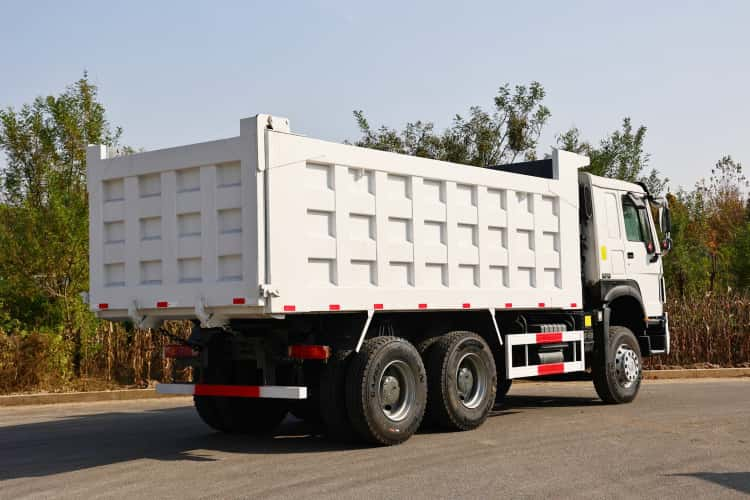
It prevents hidden load-path defects from propagating during the new reman lifecycle
Fatigue failure is progressive. A small crack in a load-bearing member grows under repeated cyclic stress. When a truck enters heavy vehicle remanufacturing, it carries the accumulated damage of its first life. Even if cracks are not large enough to cause immediate failure, the remaining fatigue life may already be nearly exhausted.
Structural capacity assessment calculates the residual margin, accounting for existing corrosion, distortion, weld quality and prior overload history. It identifies cores where remaining fatigue reserve is too low to survive another full operating cycle. Skipping this step means releasing a reman asset with a ticking structural failure risk — a risk that will only reveal itself after months or years of fleet operation under load.
It supports consistent asset classification and tender audit requirements
Formal certified vehicle remanufacturing classification, ESG documentation and green tender eligibility depend on proof that the asset meets defined safety and performance standards. Structural assessment records become the first piece of the permanent VIN-linked audit dossier.
For auditors and fleet procurement teams, engine bench test results alone are insufficient evidence of a quality reman asset. They need confirmation that the vehicle’s primary load path has been evaluated and found capable of supporting its rated duty. This initial assessment creates the foundational proof that distinguishes certified vehicle remanufacturing from a powertrain-only overhaul.
It avoids the economic loss of wasted reman resources
Full disassembly, chemical cleaning, NDT inspection, machining, replacement parts and bench validation consume substantial workshop time and capital. These resources are only economically rational when applied to cores that have the potential to become safe, compliant reman assets.
If structural screening happens late in the heavy vehicle remanufacturing workflow, the workshop may discover irreversible frame damage after spending many labour hours. Upfront structural assessment acts as an economical filter: low-value, high-risk cores are eliminated before heavy resource investment begins. This discipline stabilises reman production economics and keeps quality consistent at scale.
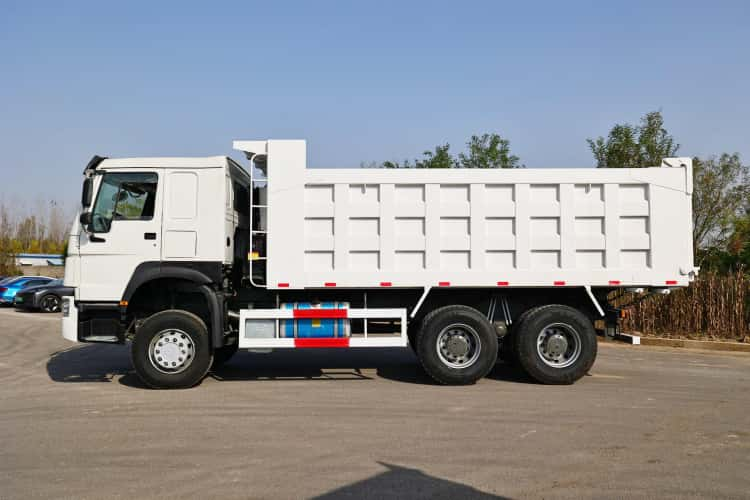
Key clarification: Structural assessment is not a one-time visual check
A proper structural capacity assessment combines multiple inputs, rather than a quick visual scan:
- Frame straightness and dimensional survey
- Ultrasonic thickness measurement for corrosion loss
- Review of crash, overload and fire history
- Preliminary NDT screening of high-stress transition zones
- Calculation of residual safety margin against OEM load specifications
It is an engineering evaluation of capacity, not a superficial condition check.
Closing
All reman performance promises rest on the structural capacity of the truck’s load-bearing chassis. Powertrain, brake and hydraulic systems deliver function, but the frame and primary structural members carry the load. Once structural capacity is irreversibly depleted, no overhaul can restore the asset to a safe, predictable lifecycle baseline.
That is why structural capacity assessment must be the first gate. It answers the most fundamental engineering question before any other work begins: does this core still have the residual structural reserve to safely fulfil its original design duty after asset reset? For REMAN ROAD, this assessment is the non-negotiable starting point of every certified vehicle remanufacturing journey.