What “Design For Reman(DfR)” Means for Heavy Truck Platform Development?
Introduction
Traditional heavy truck design prioritises new-vehicle performance, payload capacity, emissions compliance, manufacturing speed and initial purchase cost. Even durable legacy platforms suitable for reman were rarely engineered with remanufacturing as an explicit requirement — their reman potential is an incidental side effect of serviceable, overbuilt architecture.
Design for Reman (DfR) changes this logic. It is an intentional platform development principle: engineers build the vehicle from the ground up so that full certified reman, component grading, NDT inspection, rework and lifecycle reset can be executed efficiently, safely and repeatedly after the first service life. It is not merely “making trucks easy to repair”. It means designing for the full REMAN ROAD-style reman workflow: core intake, teardown, cleaning, non-destructive testing, sorting, rework, bench validation and reassembly. This article breaks down what DfR translates to in heavy truck platform development.
Modular subsystem partitioning, oriented for disassembly and component isolation
DfR starts with architecture. Subsystems are physically partitioned so functional groups can be separated without destructive cutting, thermal damage or forced disassembly of unrelated assemblies. Critical load-bearing structures, consumable wear parts and electronic control units are not fused into monolithic integrated modules.
Fastener selection is standardised where practical; permanent adhesive bonding, one-time crimp joints and hidden tamper-only connections are avoided on high-value, reusable components. Clear separation allows reman teams to remove the engine, axle, steering assembly and suspension independently. When one module fails grading, it can be replaced without scrapping adjacent high-value structural parts.
This differs from conventional serviceability. Routine service only expects access to filters, seals and brake parts. DfR expects full teardown down to individual critical components for NDT and grading at the end of the first lifecycle.
Clear segregation between permanent structural cores and sacrificial consumables
A core design for reman rule is explicit component role separation. Long-lifecycle structural assets — frame rails, crankshafts, axle housings, steering knuckles — are engineered as reusable core assets. Wear-prone items such as bearings, seals, gaskets, friction linings and hoses are designed as fully sacrificial, easily replaceable consumables.
Designers avoid forcing high-value forgings to act as wear surfaces. They add removable wear sleeves, thrust washers and liners. When wear occurs, only the inexpensive insert is swapped, rather than requiring machining or scrapping of an expensive cast or forged base component. This reduces rework cost and preserves the structural material integrity of the asset across multiple reman cycles.
Built-in inspection access and NDT-friendly geometry
Many otherwise robust components have geometry that blocks reliable NDT: blind crevices, tight radii, trapped corrosion pockets, welded overlaps that cannot be fully cleaned or probed. Under DfR, geometry accounts for inspection.
High-stress zones, fatigue hotspots and weld seams are designed with unobstructed access for UT, MPI and PT inspection. Surfaces are shaped so they can be stripped of paint, scale and corrosion without excessive labour. Drain paths are added to stop trapped moisture from creating hidden corrosion inside closed cavities.
DfR also defines accessible reference datums for dimensional measurement. Inspectors can quickly compare geometry against OEM tolerances without custom fixturing. The platform is designed to be measurable, not just operable.
Documented, stable material specifications and controlled fatigue margins
For design for reman platforms, material choices are selected with future residual fatigue assessment in mind. Alloy grades, heat treatment, hardness limits and allowable defect thresholds are fixed, fully documented and traceable by component serial number.
Engineers set a deliberate, quantifiable fatigue budget. The design clearly separates the load consumed during the first OEM service life from the residual margin reserved for future reman cycles. This does not mean unlimited life, but it gives reman engineers a predictable framework to calculate residual structural capacity during each asset-state assessment.
Material changes during platform updates are version-controlled. If an axle casting switches alloy mid-production, every unit carries traceable material version information. This eliminates the major risk: inspectors grading identical-looking parts that carry different metallurgical failure assumptions.
Standardised interfaces and backward-compatible component interchangeability
DfR prioritises stable mechanical, hydraulic and electrical interfaces across platform generations. Mounting points, bolt patterns, torque classes, connector pinouts and axle interface dimensions remain consistent for long platform lifecycles.
Interchangeability supports reman scalability. Qualified reusable components harvested from one core can be used to rebuild another unit of the same platform family. It also reduces the risk that a single obsolete component variant will render an otherwise sound core unbuildable.
This stands in contrast to frequent incremental redesigns that alter mounting geometry to cut new-vehicle manufacturing cost, which break reman part circulation and force reman workshops to rely on custom adaptation.
Designing for rework: defined re-machining limits and approved repair envelopes
In DfR, engineers predefine which components are eligible for rework, and set clear remachining stock allowances from the start. Journal diameters, seal surfaces and mating faces include controlled overstock so they can be restored once or multiple times within safe thickness limits.
Equally important: the design explicitly marks which cracks, deformations or corrosion damage are repairable and which are not. Approved WPS (Welding Procedure Specification) for structural rework are created and validated during platform development, not improvised later in the field.
A non-DfR truck may be repairable by ad-hoc welding, but it has no engineered rework boundary. Design for reman embeds the rework rules into the original design envelope, aligned with fatigue testing data.
Digital traceability baked into every component and subsystem
Modern DfR includes embedded digital identity. Critical components receive permanent, non-removable marking or serial IDs linked to the vehicle VIN from factory build. Material batch, production date, test records and design revision are stored in a linked digital dossier.
When the truck reaches its first reman cycle, inspectors pull the original design assumptions instantly. After grading, NDT reports and rework records are appended to the same record. This creates a continuous lifecycle log that carries through subsequent reman cycles.
Without this built-in traceability, reman teams must reverse-engineer platform rules years later, introducing subjectivity and audit risk for fleet buyers and tender compliance.
Balancing DfR with competing OEM priorities
Design for Reman creates trade-offs that platform teams must balance:
- Extra inspection access and modular separation may increase initial vehicle weight or component count
- Stable interfaces can limit flexibility for rapid new-model upgrades
- Predefined rework stock adds material cost to the brand-new truck at the point of manufacture
DfR is therefore rarely the default choice unless circular economy targets, long-lifecycle markets or post-sale service strategy justify it. It is a deliberate business and engineering choice, not a natural by-product of durable truck design.
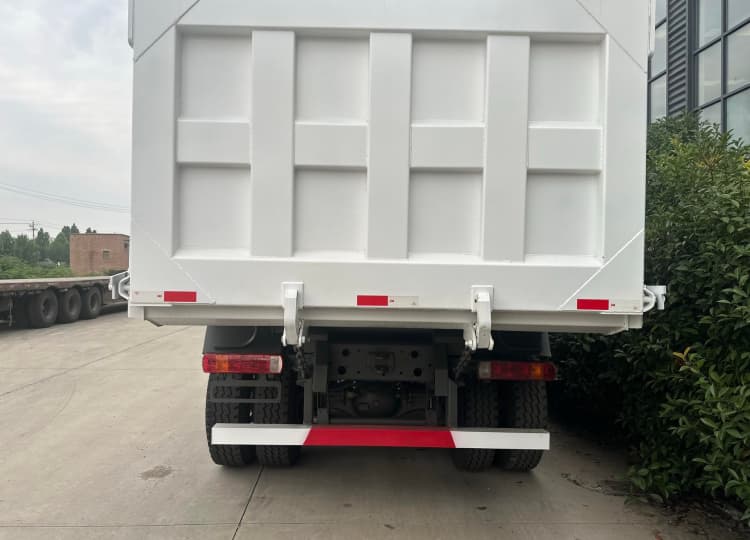
Key distinction: DfR ≠ designing trucks to last forever
DfR does not eliminate end-of-life recycling. It defines a clear hierarchy for material value:
- High-value structural components are designed for repeated reman reset
- Repairable parts have defined rework limits
- Consumables are designed for easy replacement
- Parts that reach irreversible damage thresholds are designed for clean disassembly and material recycling
The goal is a predictable value cascade, not immortality. A DfR platform knows exactly where each component exits the reman loop.
Closing
Design for Reman means building a heavy truck platform with its second, third and subsequent lifecycle resets in view, not only its first delivery to the fleet. It translates into modular disassembly architecture, separated consumable and structural parts, NDT-accessible geometry, traceable stable material rules, pre-approved rework limits and stable cross-unit interchangeability.
For REMAN ROAD and global fleet buyers, DfR platforms represent the next frontier of circular heavy vehicle supply. Unlike legacy trucks whose reman potential is accidental, DfR vehicles are engineered to be remanufactured. They lower inspection uncertainty, reduce rework risk, improve consistency of asset reset and make long reman cycles a scalable, auditable industrial standard.