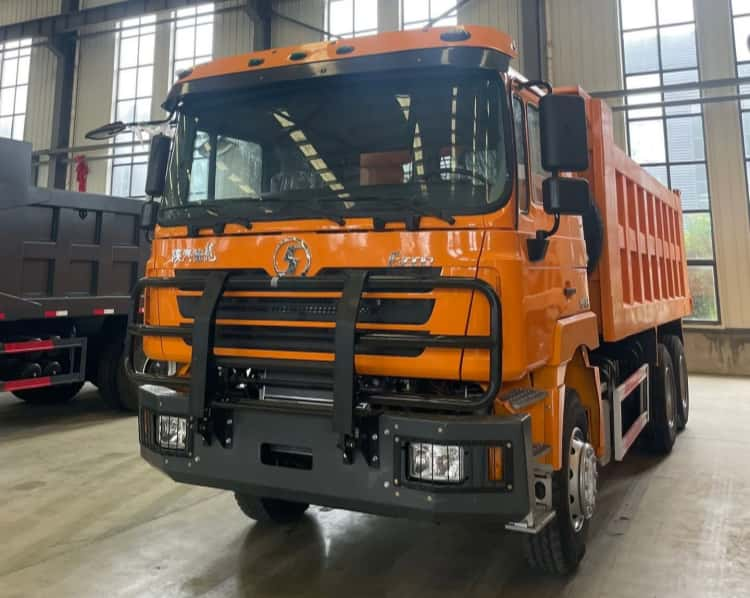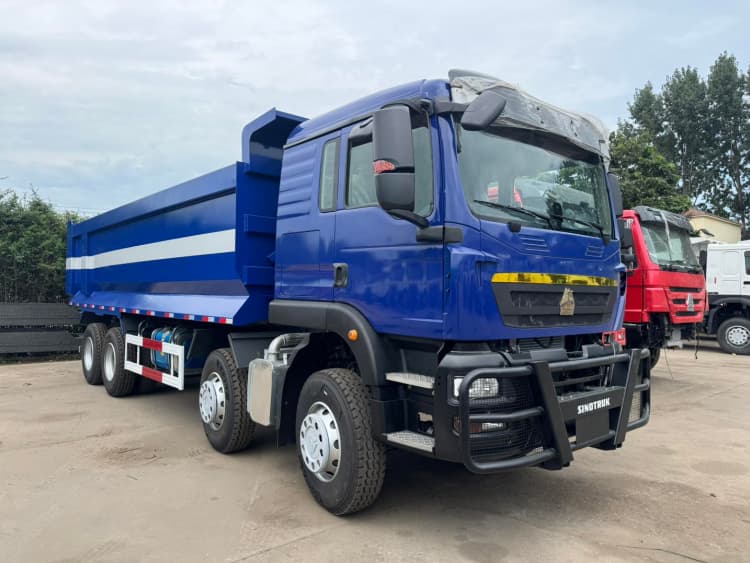
The Core Industrial Premise That Makes Heavy Trucks Reman Technically Feasible
Introduction
Not every industrial product can be reliably remanufactured. Many consumer goods are designed as sealed, disposable assemblies with no practical path for inspection, component sorting and performance restoration. Heavy-duty trucks, by contrast, are built on design characteristics that make certified trucks remanufacturing not just possible, but technically practical at scale.
The feasibility does not come from simple repairability. It rests on a set of foundational industrial premises built into heavy truck engineering: modular construction, overdesigned load-bearing components, disassembly-friendly architecture, defined failure modes and testable subsystems. These premises are the reason REMAN ROAD’s full lifecycle-reset trucks reman workflow can deliver consistent, auditable outcomes.
Modular, separable subsystem design
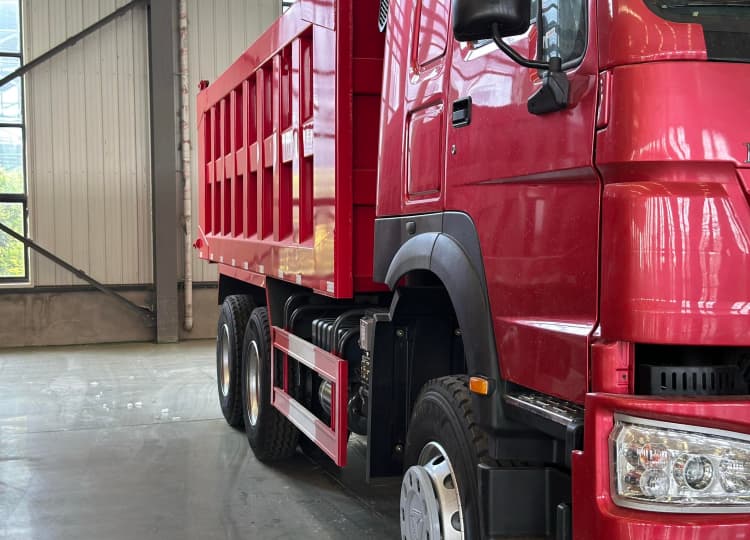
Heavy trucks are engineered as an assembly of independent, bolted subsystems: frame, engine, transmission, axles, steering, suspension, brake and hydraulic circuits. Critical functional units can be detached without destroying adjacent structures.
This modularity is the first prerequisite for certified trucks remanufacturing. It allows full disassembly down to individual parts, rather than forcing destructive teardown. Each component group can be cleaned, inspected, graded, reworked or replaced separately. Without this separable architecture, targeted NDT screening and component-level sorting would be impossible. Unlike integrated sealed units, heavy truck subsystems are intended to be taken apart, examined and reassembled.
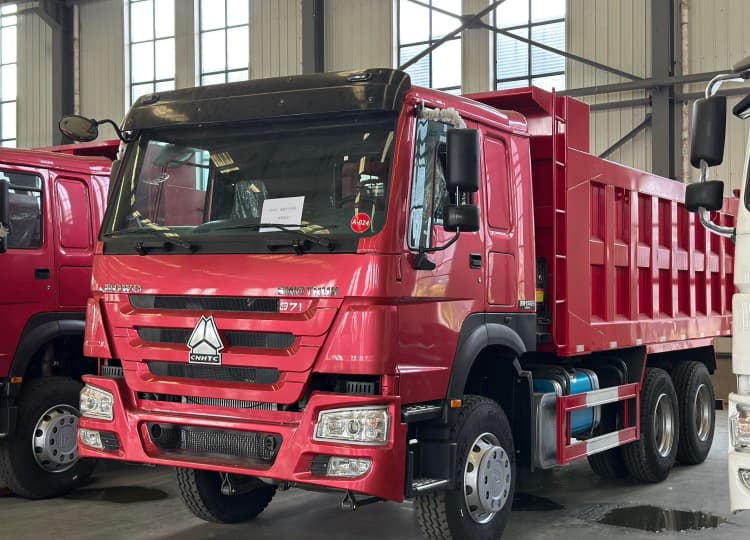
Structural components are overengineered for cyclic fatigue tolerance
Frame rails, crankshafts, steering knuckles, axle housings and fifth-wheel brackets are designed with substantial safety margins. OEMs size these forged and cast steel components to survive repeated heavy load cycles, shock loads, vibration and variable hauling conditions over their first service life.
This built-in overdesign creates residual usable potential. When a truck retires from its first life, many load-bearing parts have accumulated wear but have not yet reached their absolute metallurgical failure limit. Provided latent cracks and corrosion are detected and removed via NDT, these components retain enough remaining fatigue capacity to support a new defined service cycle. If heavy truck structures were engineered to fail immediately once the first design life expired, heavy trucks reman would not be safe or technically viable.
Most degradation is localised, not uniform across the whole asset
Truck ageing is not an all-or-nothing condition. Degradation concentrates in specific locations: bearing surfaces, seal interfaces, gear tooth contact zones, piston rings, brake friction materials and high-stress transition points on welds and frame cutouts. Many other sections of the same component see far lower stress and remain materially sound.
This localised failure pattern makes component grading effective. Certified trucks reman workflows do not scrap an entire assembly just because one small part wears out. The certified trucks reman workflow isolates degraded elements, replaces or repairs only the defective zones, and retains the bulk of the sound base material. This is a key distinction from products that degrade evenly across all material volume and cannot be selectively restored.
Dimensional and material standards are stable and well-documented
Heavy-duty truck platforms are produced to consistent OEM engineering drawings, tolerance tables, material grades and heat-treatment specifications. Critical dimensions, hardness requirements, alloy specifications and allowable wear limits are defined and repeatable across units of the same model series.
This stable baseline gives inspectors fixed pass/fail criteria. Technicians can measure journal diameters, wall thickness, gear backlash and alignment against published limits; NDT inspectors use agreed defect acceptance thresholds. Standardised engineering documentation turns subjective judgement into objective verification. Without stable reference specifications, there would be no consistent way to decide whether a component qualifies for reuse.
Failure modes are predictable and testable
Heavy truck subsystems have well-understood failure modes: fatigue cracking, wear, corrosion, surface spalling, seal leakage and calibration drift. These failure modes respond to established inspection techniques.
- Fatigue cracks: detected by UT and MPI
- Wear and distortion: captured via dimensional measurement
- Leakage and pressure decay: validated by hydraulic and air bench testing
- Powertrain performance loss: quantified by dynamometer testing
Because the failure mechanisms are known, certified trucks reman workflow can build targeted quality gates. Every risk point can be screened before release. If failures were random, unidentifiable or impossible to test offline, lifecycle reset could not be guaranteed.
Consumables are decoupled from permanent structural components
A deliberate design separation exists between sacrificial wear parts and long-life structural hardware. Filters, seals, gaskets, brake linings, bearings and hoses are designed to be replaceable consumables. Frame, crankshaft and axle castings are intended as long-life capital components.
This separation is critical for reman economics and technical feasibility. During reset, all disposable consumables are replaced by default. The certified trucks reman workflow isolates the variable wear items from the high-value structural core.
It allows the asset to be restored without discarding the large embodied-carbon investment in forgings and castings. If every structural part degraded at the same rate as seals or bearings, reman would offer little advantage over building new equipment.
Performance can be validated via bench testing independent of road conditions
Powertrain, brake and hydraulic functions can be tested in controlled workshop environments before the truck returns to the field. Dynamometers, brake test benches and hydraulic pressure rigs simulate load, torque, cycle pressure and braking force without relying on unpredictable road conditions.
Offline bench validation means the reman team can verify subsystem performance against fixed benchmarks. The finished asset’s functional baseline is proven, rather than merely assumed. This is what makes it possible to define a repeatable reman performance standard across different workshops and markets.
Metallurgical properties remain stable unless damaged by extreme events
The base material properties of properly operated steel forgings and castings do not degrade automatically with operating hours. Material quality only becomes compromised by specific events: overload fatigue, thermal damage from fire, severe corrosion, or crash deformation.
If a core has not suffered those irreversible events, its original heat treatment, grain structure and strength characteristics remain intact. heavy trucks remanufacturing’s job is to screen out units and components that have crossed that irreversible damage threshold, while preserving components that retain their original metallurgical integrity. This is the underlying material science premise that makes safe reuse of high-value structural parts possible.
Boundary condition: Feasibility is not universal
These premises only apply to eligible cores. A truck that experiences fire, catastrophic frame bending, deep through-wall corrosion or extreme thermal damage loses its recoverable material characteristics. Such cores are not reman candidates and must be recycled. Heavy trucks reman feasibility depends on selecting cores that have not crossed this irreversible metallurgical damage boundary.
Closing
Heavy trucks remanufacturing is technically feasible not because old trucks can be patched up, but because the original industrial design of heavy-duty assets aligns with the rules of controlled recovery. Modular separable architecture, conservatively overdesigned structural steel, localised wear patterns, stable engineering specifications, predictable failure modes, decoupled consumables and bench-testable subsystems together create the foundation for asset reset.
For REMAN ROAD, these inherent engineering characteristics are the bedrock upon which the entire certified trucks reman workflow is built. They turn a theoretical circular-economy concept into a repeatable, auditable industrial process for global fleet buyers.